3 min
3 min 
Someone moves into your neighborhood. They’re looking for a new gym. They open Google Maps, type “gym near me,” and scroll.
Which one do they click? Not the closest one. Not the cheapest one. They click the one with 4.7 stars and glowing reviews.
That’s the power of Google reviews. They’re the digital version of a friend saying, “You have to check out this place.”
And for gyms, where trust and reputation drive decisions, reviews are often the deciding factor.
This post breaks down:
- Why Google reviews matter for gyms
- How to use WiserReview to collect, manage, and showcase them
- The three mistakes that make gyms lose prospects without even realizing it
Let’s get into it.
Why Google reviews matter for gyms

Even if your gym has the best equipment and trainers in town, reviews decide whether people walk through your door. Here’s why they carry so much weight:
1. Reviews are the new word-of-mouth
Gyms thrive on community. A single five-star review about a supportive coach or a clean locker room can tip a prospect from “just browsing” to “signing the contract.”
In fact, 87% of consumers read online reviews before making a local purchase decision.
2. Local SEO visibility
Google ranks gyms with consistent, high-quality reviews higher in Maps results. That’s how you capture the “gym near me” searches happening every day in your city.
According to Moz’s Local Search Ranking Factors, review signals make up about 16% of Google’s local ranking algorithm. More reviews = more visibility.
3. Conversion booster
A competitor may have shiny machines, but if their reviews say “dirty showers” and “unhelpful staff,” prospects won’t risk it.
Research from Podium shows that 93% of consumers say reviews influence their purchasing decisions, making a strong review profile the difference between curiosity and sign-up.

All your reviews in one place
Collect reviews, manage every response, and display them where they matter most.
Start Free →How to use Google reviews for a gym
Here’s where most gyms go wrong: they rely on luck. They hope happy members will take the time to leave a review. Reality? Most people won’t unless you ask.
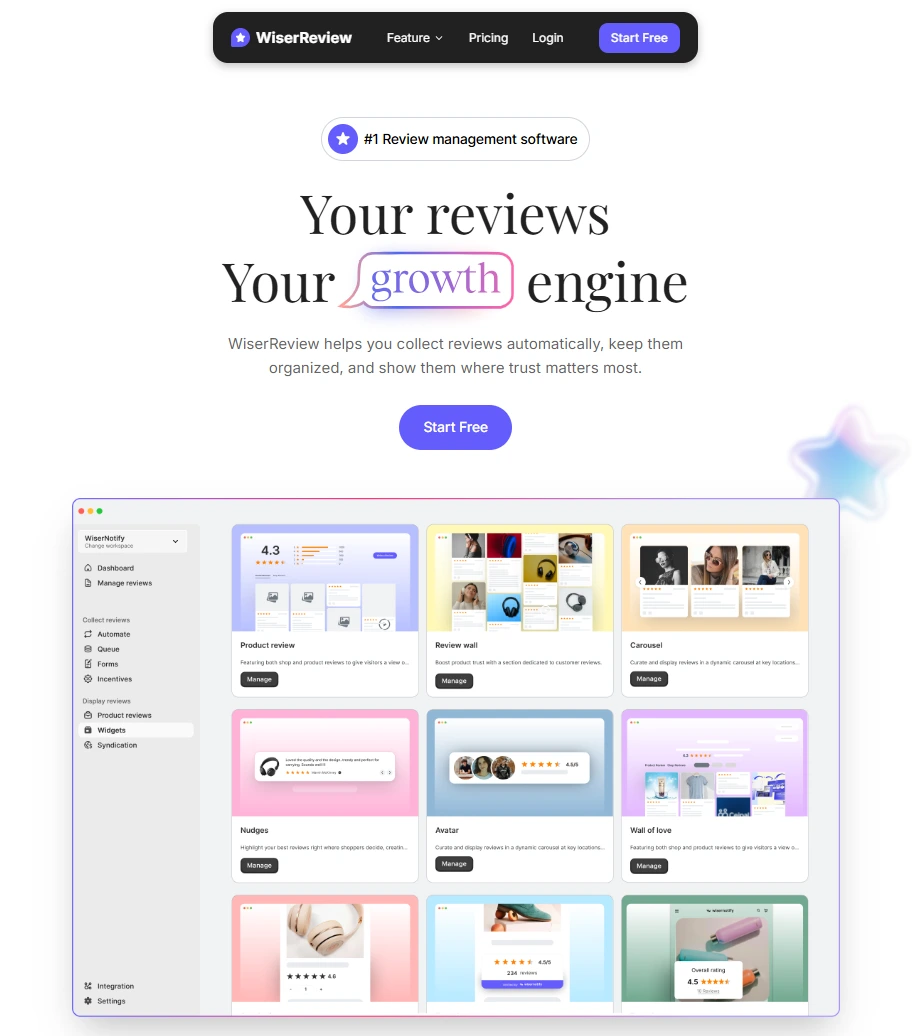
That’s where WiserReview comes in.
Collecting gym reviews
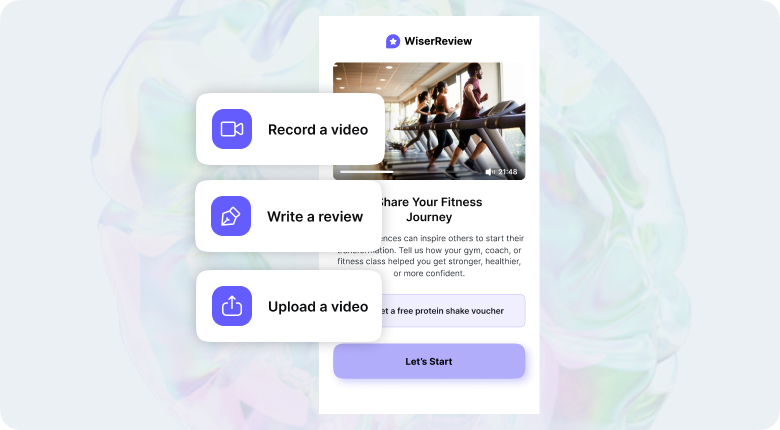
Automated requests: WiserReview sends review requests after a positive interaction. For example, someone just finished a free trial week and loved the vibe. They get a text or email asking, “How was your experience? Leave us a quick review.”
Smart timing: Don’t ask too early. A new member who hasn’t seen results yet doesn’t have much to say. WiserReview helps you schedule the ask after milestones (e.g., completing their first month or hitting a training goal).
Ease of use: The fewer clicks, the better. WiserReview links directly to your Google review page, so members don’t have to hunt for it.
Responding to reviews

Ignoring reviews is like ignoring someone waving at you. It doesn’t feel nice. Responding to reviews shows you care about feedback and reinforces your brand personality.
Thank positives: A simple, personal thank-you goes a long way. Instead of “Thanks for your review,” try, “Thanks, Sarah! We’re glad you love our 6 a.m. bootcamp crew.”
Handle negatives with care: Don’t argue. Acknowledge the issue, share how you’ll fix it, and invite them back. Example: “We’re sorry the locker room wasn’t up to standard. We’ve addressed this with our cleaning staff. Please reach out to us directly so we can make it right.”
Consistency: WiserReview lets you track all reviews in one dashboard, so nothing slips through the cracks.
👉 Pro tip: Replies are public. Prospects read them. A professional reply to a bad review can actually build more trust than a five-star rating with no response.
Using reviews strategically

Reviews shouldn’t just live on Google. They’re content gold. With WiserReview, you can:
Website integration: Add a “Member Stories” section with live Google reviews. It feels authentic because it is.
Social proof in ads: Drop real quotes into Facebook or Instagram ads. Example: “The trainers actually remember your name, feel like family.”
Email marketing: Feature a review in your monthly newsletter. Example: “I’ve lost 20 pounds since joining, and the staff made it fun.” That testimonial sells harder than any promo.
3 Mistakes to avoid with Google reviews for the gym

Even with the right tools, gyms often sabotage themselves. Watch out for these traps:
1. Ignoring bad reviews
Every gym gets them. Maybe a treadmill broke mid-run, or someone had a bad first impression. The mistake is silence.
Prospects notice unresolved complaints. Respond quickly and show you care.
2. Asking too early
New members who just signed up don’t have a story to tell yet. Asking at the wrong time leads to lukewarm, vague reviews.
Wait until they’ve had a win, like completing their first challenge or getting personalized training advice.
3. Copy-paste replies
Gym owners are busy. But “Thanks for your feedback” repeated 50 times looks robotic. Personalization takes seconds and shows authenticity.
WiserReview’s templates help speed this up without making replies feel canned.
Wrap up
Google reviews are more than stars. They’re trust signals, SEO fuel, and conversion tools. For gyms, they can mean the difference between a whole class and an empty one.
WiserReview makes the process simple: collect reviews at the right time, respond with personality, and showcase them everywhere.
If you want more sign-ups without spending more on ads, start here: ask for reviews, respond with care, and let your members do the selling for you.
Next step: Want to see how many reviews your gym competitors have? Open Google Maps, type “gym near me,” and count. If they’re ahead, it’s time to catch up.
Frequently asked questions
Because most people check reviews before joining. Strong ratings improve trust, visibility in Google Maps, and sign-up rates.
After a positive milestone, like finishing a free trial, completing the first month, or reaching a fitness goal.
Acknowledge the issue, explain how it’s being fixed, and invite the member back. A professional reply can turn a bad review into a trust-builder.
Yes. Reviews can be added to your website, shared on social media, or featured in ads and newsletters for social proof.
Common ones include ignoring reviews, asking too early, and posting copy-paste replies instead of personal responses.

Krunal