3 min
3 min 
When was the last time you tried a new restaurant or hired a local plumber without checking reviews first? Chances are, you didn’t.
For most of us, online reviews are the new word of mouth. But when it comes to Google reviews vs Yelp reviews, which one really drives more local customers to your door?
Both platforms are powerful, but they play different roles in local search, customer trust, and online reputation.
Let’s dig in and see how they compare.
Google vs Yelp reviews: Quick comparison
| Feature | Google Reviews | Yelp Reviews |
|---|---|---|
| Visibility | Appear in Google Search & Maps | Primarily inside Yelp, sometimes in Google results |
| Barrier to Entry | Any user with a Google account can leave reviews | Requires a Yelp account; some reviews get filtered |
| Filtering & Moderation | Light moderation; fake reviews can slip through | Aggressive filtering, many reviews marked “not recommended” |
| SEO Impact | Major ranking factor for local search results | Limited impact on Google search ranking |
| Trust & Authenticity | Huge user base, but fake reviews are common | Smaller but more engaged user base, reviews seen as detailed |
| Cost & Business Tools | Free business profile; optional paid ads | Free profile, but Yelp pushes paid “Enhanced Listings” |
| User Behavior | Quick star ratings, short feedback | Longer, more detailed reviews; active Yelp community |
| Best For | Local SEO, visibility in Google Maps, and attracting new customers | Building reputation with a niche audience, restaurants, and services in big cities |
What are Google Reviews?
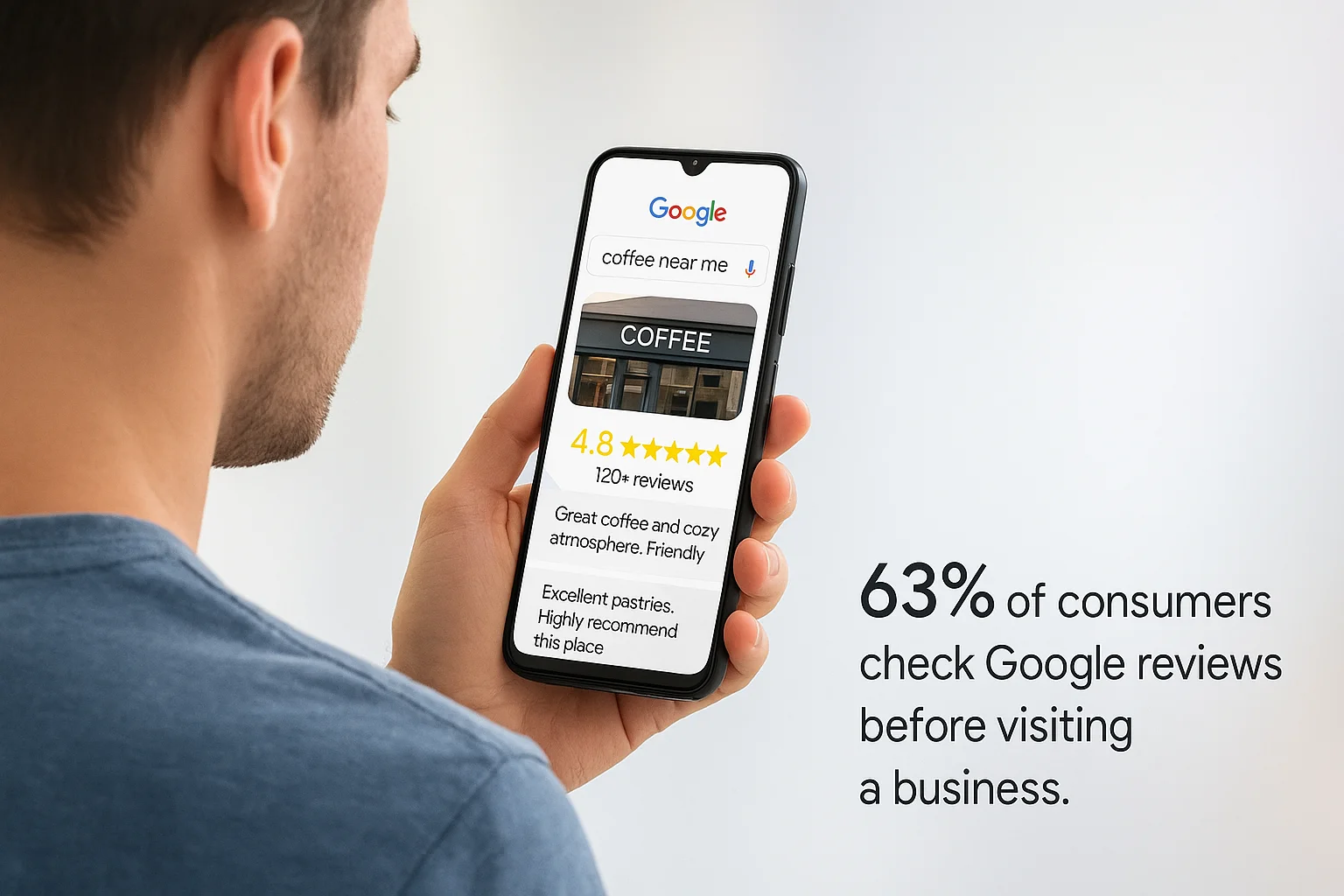
Google reviews are customer ratings and comments tied to your Google Business Profile. When people search for “coffee near me” or “emergency dentist,” they see star ratings right in Google Maps or search results.
- How Google Reviews Work: Any user with a Google account can leave feedback. Reviews show up almost instantly. Businesses can reply publicly.
- Impact on SEO: Google reviews are a local ranking factor. More positive reviews + responses = higher visibility in local search results. In fact, studies show that businesses with 50 or more Google reviews rank on average 18% higher in local search results.
- Why it matters: For many small businesses, this is the main review platform customers see. Approximately 63% of consumers report checking Google reviews before visiting a business.
Have you ever noticed how some businesses with hundreds of reviews appear at the top of Google Maps? That’s no accident.

Show Real Reviews That Build Trust
Collect and display photo, video, and text reviews with full design control.
Start Free →What is Yelp?
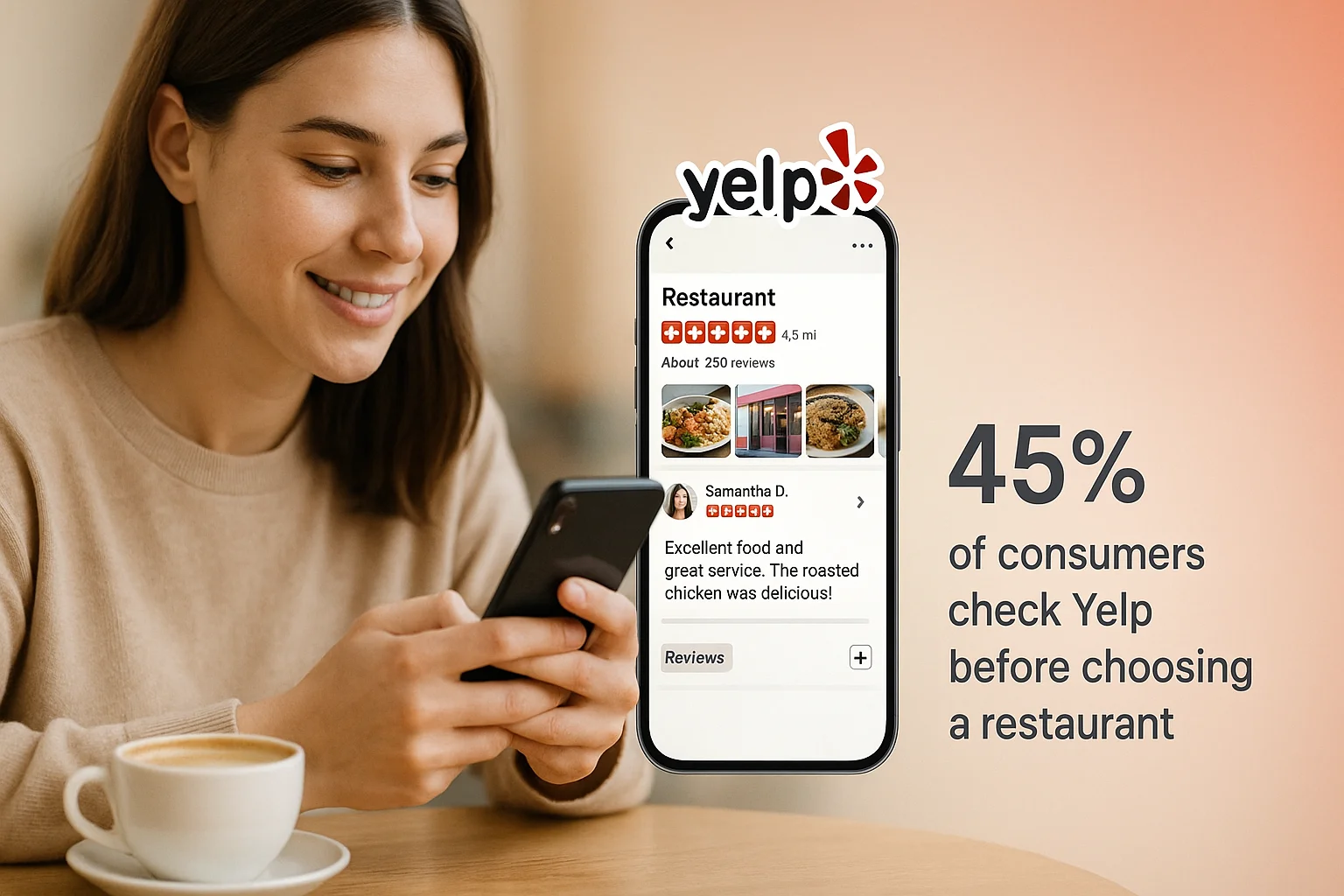
Yelp is one of the most popular review platforms in the US, especially for restaurants, home services, salons, and local shops.
Founded in 2004, Yelp built a dedicated community of reviewers (a.k.a. “Yelpers”). Today, the platform sees over 178 million unique monthly visitors and hosts more than 265 million reviews worldwide.
- How Yelp Reviews Work: Users must have a Yelp account to post reviews. Yelp employs a strict algorithm that can filter out reviews it deems to be fake or biased. These often get labeled as “not recommended “employees.
- Why it matters: Yelp still appears high in search results, being listed in many categories. In specific industries (like dining in big cities), Yelp carries substantial weight. In fact, 45% of consumers report checking Yelp before choosing a restaurant or local service.
- Reputation factor: Yelp reviews tend to be more detailed and trusted among heavy users. Around 60% of Yelp reviews are three sentences or longer, making them richer than the average quick Google star rating.
However, for many business owners, Yelp has a love-hate relationship: it’s great for exposure, but frustrating due to its strict filters and aggressive sales tactics for paid listings.
Key differences between Google reviews & Yelp reviews
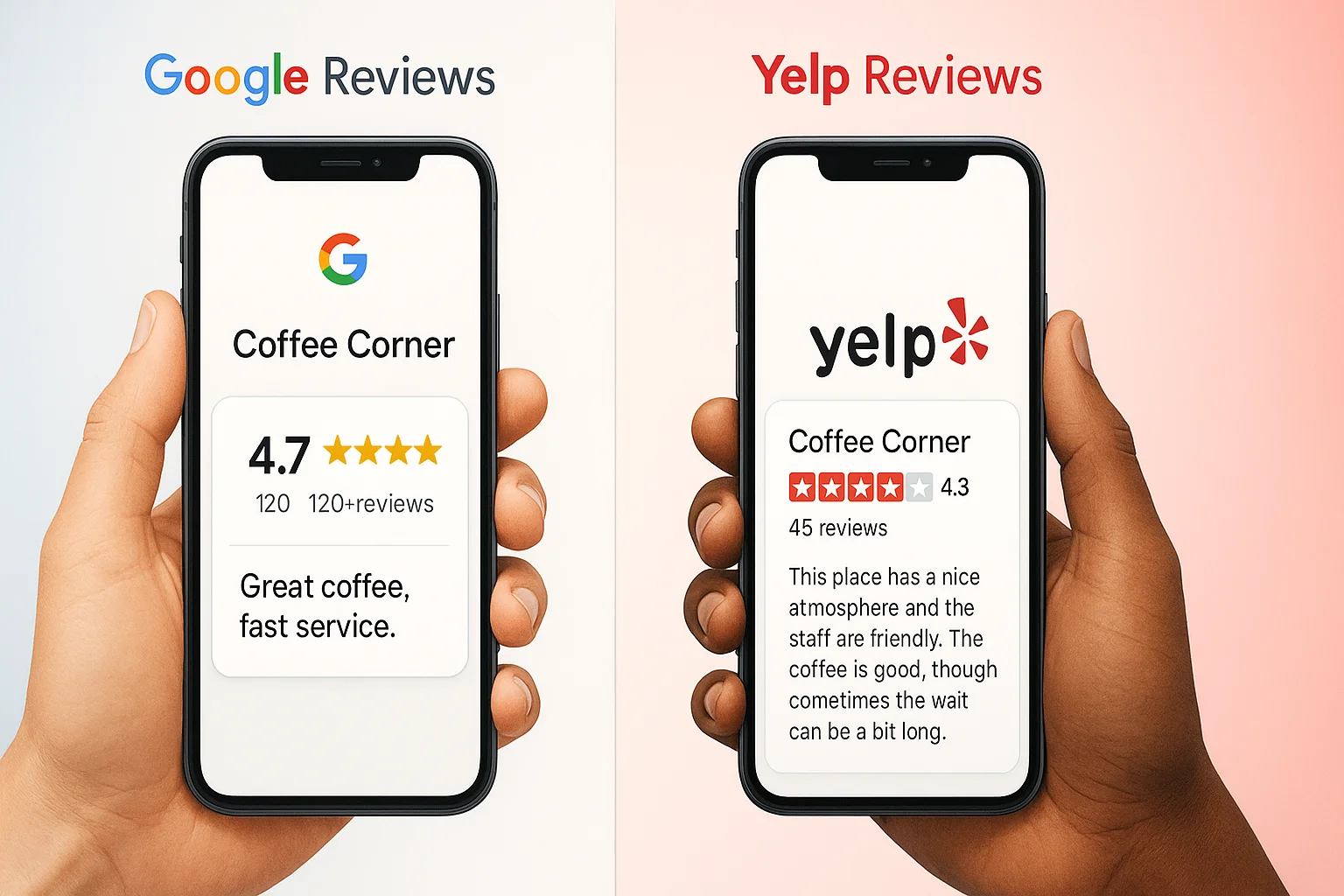
Before we delve into each factor, let’s take a quick look at how these two review platforms differ in practice and why those differences matter for a business’s online presence.
Accessibility & Barrier to Entry
- Google Reviews: Super easy. Anyone with a Google account (basically everyone) can leave a review, which has a low barrier to entry, resulting in a high volume of reviews, but also an increased likelihood of fake reviews.
- Yelp Reviews: Higher barrier. You need a Yelp account, and Yelp filters aggressively. This leads to fewer but more detailed reviews.
Review Filtering & Moderation
- Google: Light moderation. Fake reviews, spam, or even fraudulent reviews can slip through. Businesses can flag them, but they can also remove them.
- Yelp: Aggressive moderation. Many legitimate, positive reviews are often labeled as “not recommended.” Yelp claims it’s to maintain authenticity, but business owners often complain.
SEO & Visibility Impact
- Google: Huge. Rev “ews impact your “oogle Maps ratings, local search results, and overall business visibility. More verified reviews = a higher chance of showing up first.
- Yelp: Minimal SEO value outside Yelp. Yes, Yelp pages can rank in Google search, but your reviews don’t directly boost your business’s Google rankings.
Trust, Authentic Google’s Consumer Perception
- Google Reviews: Trusted because they’re everywhere. However, consumers are also aware that fake reviews exist. Still, people rely on them because they appear right when searching.
- Yelp Reviews: Seen as more detailed, trustworthy, and authentic by its user base. Yelp reviews often resemble mini blog posts, featuring detailed feedback.
Bubusiness’sagement & Cost
- Google Business Profile: Free to claim. You can manage reviews, post updates, and respond to comments. Paid ads are optional, but not required.
- Yelp: Free profile, but Yelp sales reps heavily push “Enhanced Listings.” Paid options include removing competitor ads from your page and running Yelp ads.
User Behavior & Audience Differences
- Google Users: Everyone. People often leave quick reviews, typically with star ratings and brief comments. Works well for volume.
- Yelp Users: More niche, more engaged. Yelp’s community writes longer reviews, bookmarks businesses, and checks in. Stronger in urban areas.
When to prioritize which platform
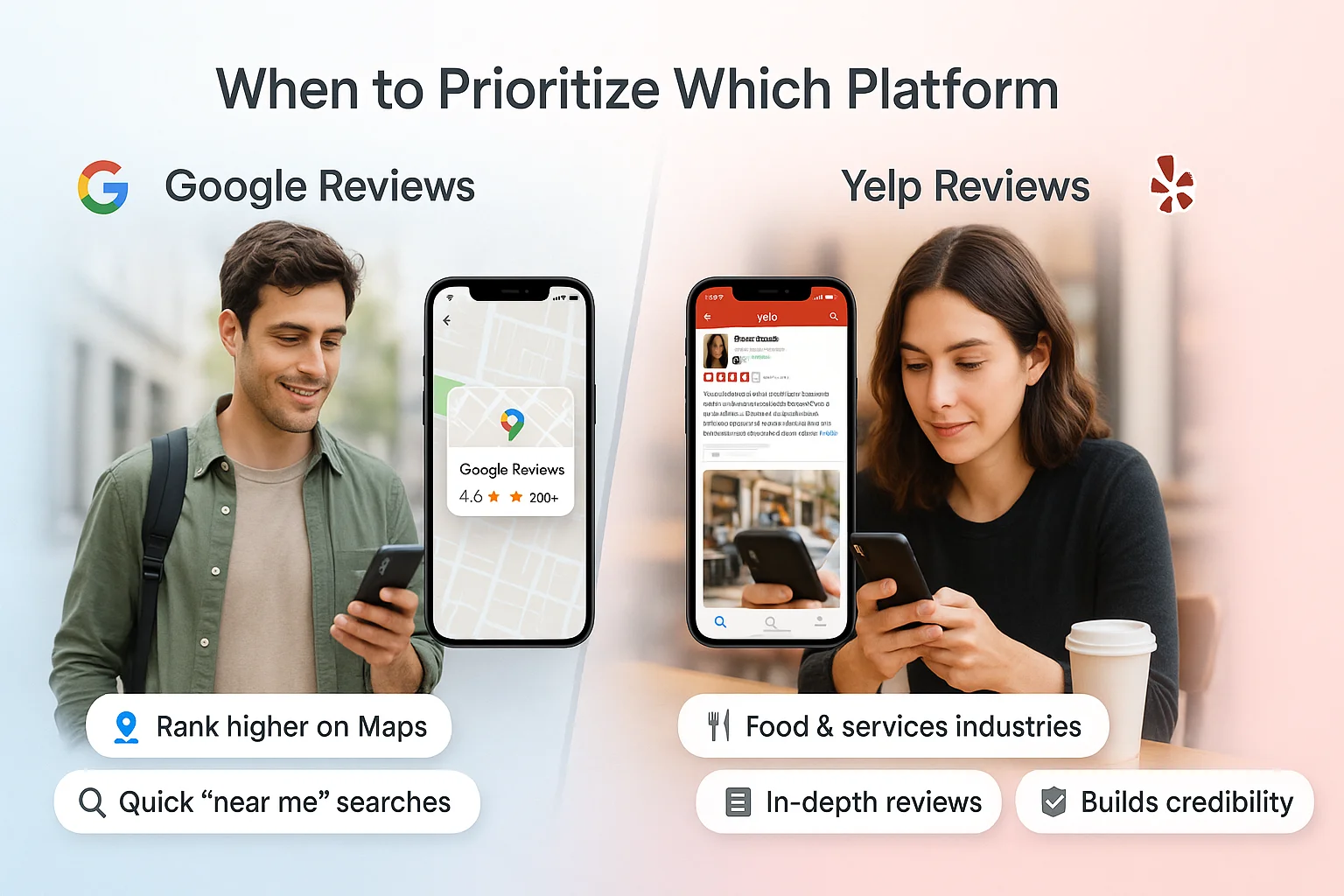
Not every business needs to invest in both platforms simultaneously. Here’s how to know when Google or Yelp should take priority.
For Businesses
PrioriYelp’ soogle Reviews if:
- You want to rank higher in Google Maps and local search results.
- You run a business where customers search “near me.”
- You need volume and visibility over depth.
Prioritize Yelp Reviews if:
- You’re in the food, hospitality, or services industry. Here are our metro areas.
- Your target audience is active on Yelp.
- You want detailed consumer reviews that build credibility.
For Consumers
- Google Reviews: Best for quick checks. Star ratings, quick feedback, easy comp” risons.
- elp Reviews: Ideal for making informed decisions. If you want in-depth insights before committing, Yelp helps.
Tips & Best practice platform
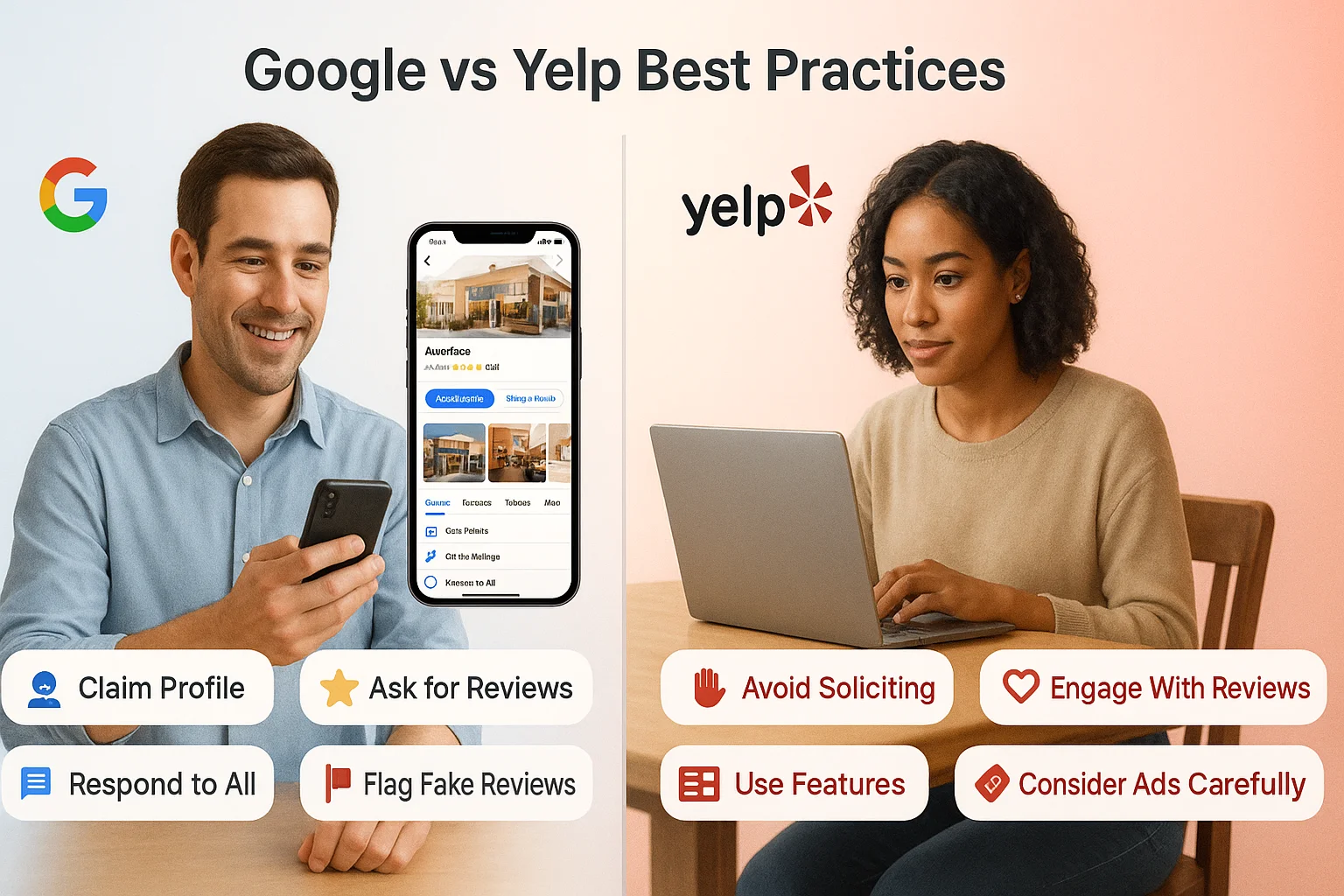
Here’s how to maximize the benefits of both review platforms without wasting time or effort.
Google’s best practices
Google makes it easy to collect feedback, but there’s a right way to do it if you want reviews that actually boost visibility and trust.
1. Claim Your Google Business Profile
- Claiming your Google business listing is essential for any business owner. Without this, you can’t reply to reviews or control your listing.
2. Ask for Reviews
- Train staff to remind happy customers to leave reviews and encourage them to leave Google ratings.
- Add a review link to receipts, follow-up emails, or texts.
3. Respond to All Reviews
- Thank you. Here’s to positive reviews.
- Address negative reviews calmly and professionally.
4. Flag Fake Reviews
- Report spam or inappropriate reviews and follow the process to remove reviews that violate Google’s policies. However, note that removal isn’t guaranteed.
5. Keep Your Profile Updated
- Add photos, correct contact details, and update services.
Yelp review best practices
Yelp takes a stricter approach to reviews, so businesses need to be thoughtful about how they manage their presence there.
1. Claim Your Yelp Profile
- Optimize your business profiles and business page to include accurate business information, hours, and a detailed list of services offered. This helps customers make informed decisions and improves your visibility.
2. Avoid Soliciting Reviews
- Yelp discourages asking customers directly. Instead, display Yelp stickers, badges, or mention “Find us on Yelp.”
3. Engage With Reviews
- Foster user engagement and community interaction by responding publicly and privately when appropriate. Thank users for their detailed reviews. Google’s trust and credibility will benefit.
- isn’t rage Yelp Features
- Use photos, service descriptions, and menus (if relevant).
5. Consider Paid Options Carefully
- Ads can drive visibility, but don’t rely only on them. Focus on building organic, genuine reviews.
Wrap up
So, which drives more local customers: Google reviews or Yelp reviews?
- If you want visibility, SEO impact, and volume, Google is the winner. It’s the review platform most potential and existing customers see first.
- If you want detailed, trustworthy reviews and an engaged niche audience, Yelp remains a vital platform, especially in the food, hospitality, and local services sectors.
The smart move? Don’t think in terms of Yelp vs Google reviews. Think of it as Yelp and Google reviews. Both review platforms shape your online reputation, customer satisfaction, and brand trust.
Build a strong presence on both. That way, no matter where your next customer looks, they’ll find genuine reviews, a trustworthy business profile, and reasons to choose you over competitors.
Your turn: Do you get more customers from Google or Yelp? Share your experience in the comments. I’d love to hear which platform has the most impact for your business.
Frequently asked questions
Google usually drives more traffic because reviews appear in Search and Maps, while Yelp is stronger for restaurants and services in big cities.
No. Google reviews directly impact local rankings. Yelp reviews mainly help inside Yelp, though Yelp pages can still rank in search results.
Yelp’s algorithm flags reviews it thinks are fake or biased. This often hides legitimate reviews, which frustrates many business owners.
Google is easier. Anyone with a Google account can review. Yelp requires an account, and even then, reviews may get filtered.
Most businesses should start with Google for visibility. Yelp is worth focusing on if you’re in food, hospitality, or urban services where Yelp has an active community.

Krunal